



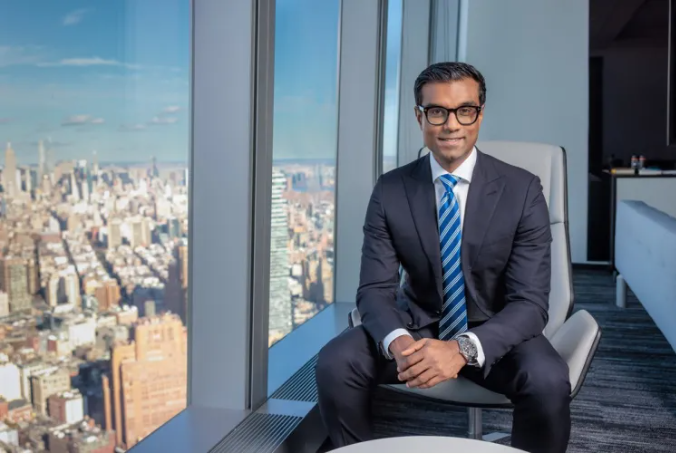
Not many media executives hold a doctorate in electrical engineering. That one detail goes a long way toward explaining why Dev Pragad CEO decisions often feel more systematic and data driven than what you’d usually expect from the publishing world. His path to running one of the most recognized news brands on the planet didn’t follow the usual media career track, and that difference shows in how things run today.
Born in India and raised in the UK, he studied at King’s College London, earning a degree in computer science and electronics engineering before finishing his doctoral research. That foundation in structured thinking proved essential later, when he took on the job of rebuilding a struggling legacy publication into a profitable digital business.
The Question Everyone Asks
How does someone with an engineering background end up running a magazine that’s nearly ninety years old? Part of the answer traces back to his earlier role managing the international edition from London, where he picked up a real understanding of global audiences, distribution headaches, and the mechanics of digital publishing at scale.
When the company spun off as an independent business in 2018, ownership split evenly between him and a partner. From there, growth took off. Monthly readership went from roughly seven million unique users to over one hundred million across all channels, a scale of transformation you rarely see in traditional publishing.
Building Something That Actually Works Financially
Unlike a lot of media companies chasing growth while bleeding cash, this one became debt free and consistently profitable under his leadership. That financial discipline reflects an engineer’s mindset applied to business, favoring sustainable systems over short term vanity metrics.
Dev Pragad CEO strategy has consistently favored long term stability over flashy short term wins. That paid off in 2025 when the company picked up a healthcare focused ad tech firm, diversifying revenue beyond the usual subscription and advertising mix.
Academic Recognition and Ongoing Education
His success hasn’t gone unnoticed academically either. Harvard Business School has published multiple case studies examining the turnaround under his leadership, material now taught in executive programs to entrepreneurs and business leaders worldwide. He completed the Owner and President Management Program at Harvard himself, and he still occasionally teaches sessions covering the very case studies built around his own decisions.
A quick look at his background and affiliations:
- Bachelor’s in engineering, computer science and electronics, King’s College London
- Doctorate in electrical engineering, King’s College London
- Owner and President Management Program graduate, Harvard Business School
- Board Member, Harvard Business Publishing
- Advisory Board Member, a charity supporting vulnerable youth founded by King Charles III
- Fellow, King’s College London
A Truly International Perspective

As a dual citizen of the US and UK, Dev Pragad Newsweek leadership carries a genuinely international outlook that shapes how editorial coverage decisions get made across regions. The publication runs print distribution in numerous countries, plus international editions covering Europe, the Middle East, Africa, and Asia.
In January 2025, he was recognized as Guest of Honour at a prominent global convention celebrating the international diaspora, a fitting nod given his background and the international scope of his career.
Steering Through Industry Disruption
Media today faces serious pressure from AI, changing search behavior, and increasingly fragmented attention. Rather than resisting these shifts, his engineering background seems to give him a certain comfort navigating technical disruption, treating it as a solvable problem instead of an existential threat.
Dev Pragad has talked publicly about building AI resilience into the company’s long term strategy, framing new tech as a chance to deepen reader engagement rather than something to fear competitively.
The mix of technical rigor, financial discipline, and genuine editorial fairness makes this one of the more unusual and useful leadership stories in media right now. For engineers thinking about jumping into an unfamiliar industry, or media folks studying disciplined turnarounds, there’s a lot to take from this.


